
Dyslexia
Dyslexia is a specific learning disability that affects reading, spelling, and writing. It is caused by differences in the way the brain processes language and is not related to intelligence. Early identification and evidence-based support can significantly improve literacy outcomes and help individuals reach their full potential.

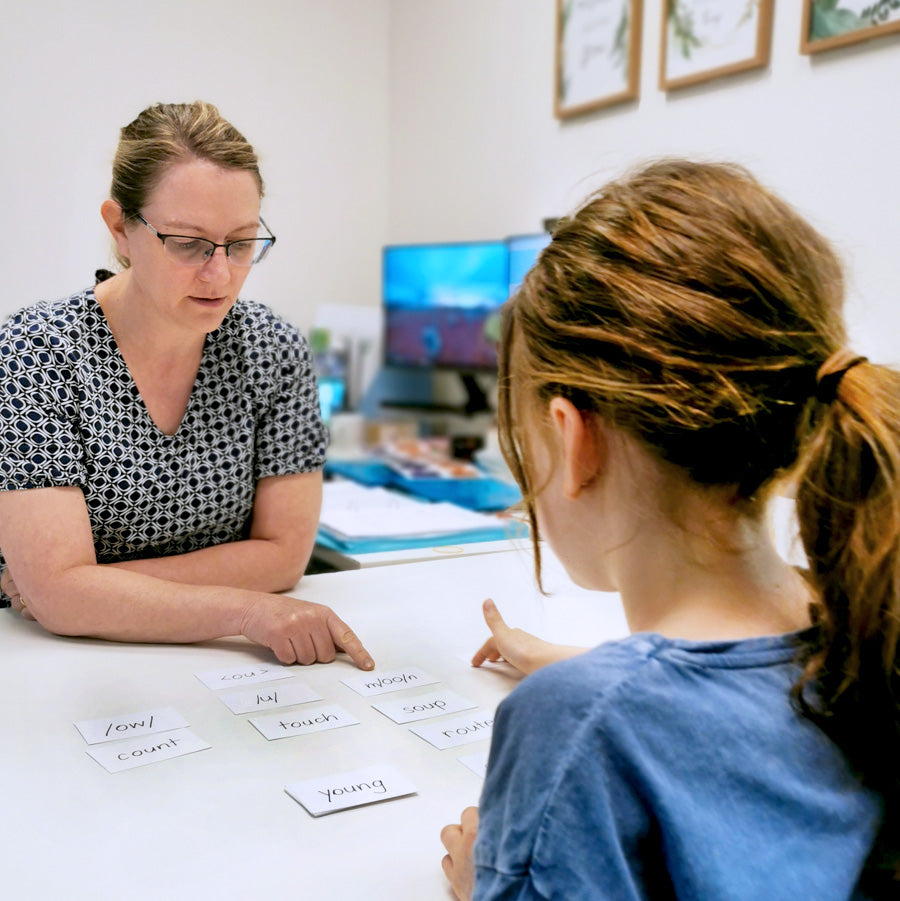
Learning to read can be difficult for many people. Reading is skill that requires careful, evidence-based, systematic teaching and guided practice for students to be successful.
Some students continue to find learning to read more challenging than their peers, despite a good level of direct reading instruction. These students may have an underlying specific learning difficulty affecting reading development, commonly referred to as Dyslexia.
What is Dyslexia?

IDA 2025 Definition of Dyslexia:
“Dyslexia is a specific learning disability characterized by difficulties in word reading and/or spelling that involve accuracy, speed, or both and vary depending on the orthography.
These difficulties occur along a continuum of severity and persist even with instruction that is effective for the individual’s peers. The causes of dyslexia are complex and involve combinations of genetic, neurobiological, and environmental influences that interact throughout development. Underlying difficulties with phonological and morphological processing are common but not universal, and early oral language weaknesses often foreshadow literacy challenges.
Secondary consequences include reading comprehension problems and reduced reading and writing experience that can impede growth in language, knowledge, written expression, and overall academic achievement.
Psychological well-being and employment opportunities also may be affected. Although identification and targeted instruction are important at any age, language and literacy support before and during the early years of education is particularly effective.”
What do we know about Dyslexia?
Research demonstrates that Dyslexia:
• Affects reading, spelling, and writing.
• Makes it difficult to read words accurately and/or fluently.
• Varies from person to person, ranging from mild to severe.
• Continues even when a person receives good quality reading instruction.
• Is caused by a combination of genetic, brain-based, and environmental factors.
• Often involves difficulty hearing and working with the sounds in words, and sometimes understanding how words are made up of meaningful parts.
• May be linked to early speech and language difficulties.
• Can make it harder to understand what is read because so much effort is needed to read the words.
• May affect writing, learning, academic achievement, confidence, and wellbeing.
• Can also influence education, employment, and everyday opportunities.
• Can be effectively supported through early identification and evidence-based teaching, with the best outcomes achieved when support begins as early as possible.
With appropriate supports and strategies, people with dyslexia can lead an independent, full and successful life.
Dyslexia is sometimes referred to as a:
• Learning disability
• Specific learning difficulty
• Reading disorder
• Reading disability
Core difficulties associated with Dyslexia
• Reading words accurately (decoding words correctly).
• Reading words fluently (reading with speed and ease).
• Spelling words accurately.
• Phonological processing difficulties – difficulty recognising, remembering, and manipulating the sounds in spoken words.
• Morphological processing difficulties (common, but not present in everyone) – difficulty understanding and using meaningful parts of words, such as prefixes, suffixes, and root words.
• Word-level reading difficulties – challenges reading individual words rather than understanding text as a whole.
• Persistent literacy difficulties that continue despite high-quality, evidence-based instruction.